English
 русский


Molybdenum is one of the most industrially valuable refractory metals on earth, and among its many product forms, molybdenum strip occupies a particularly important position. Thin, flat, and precisely dimensioned, molybdenum strip is used across a wide range of high-temperature, high-stress, and electrically demanding applications — from semiconductor manufacturing and aerospace components to lighting technology and furnace engineering. Despite its critical role in advanced industries, molybdenum strip remains poorly understood outside of specialist procurement and engineering circles. This article examines what molybdenum strip is, how it is made, what defines its quality, and where it is most effectively applied.
What Is Molybdenum Strip
Molybdenum strip is a flat-rolled product manufactured from pure molybdenum or molybdenum-based alloys, produced in thin, continuous sheet form with tightly controlled thickness, width, and surface finish tolerances. It is distinct from molybdenum sheet (which is generally thicker and sold in cut pieces) and molybdenum foil (which is extremely thin, often under 0.05 mm), occupying the intermediate range typically defined as 0.05 mm to 0.5 mm in thickness, though definitions vary between suppliers and standards bodies.
The base material is elemental molybdenum (Mo), atomic number 42, a transition metal with an exceptionally high melting point of 2,623°C — the fifth highest of any element. This melting point, combined with molybdenum's low thermal expansion coefficient, high thermal conductivity, and strong resistance to corrosion by most acids and molten metals, makes it uniquely suited to environments that would destroy conventional metals. When formed into strip geometry, these properties are preserved while the material gains the practical form factor needed for precision engineering applications.
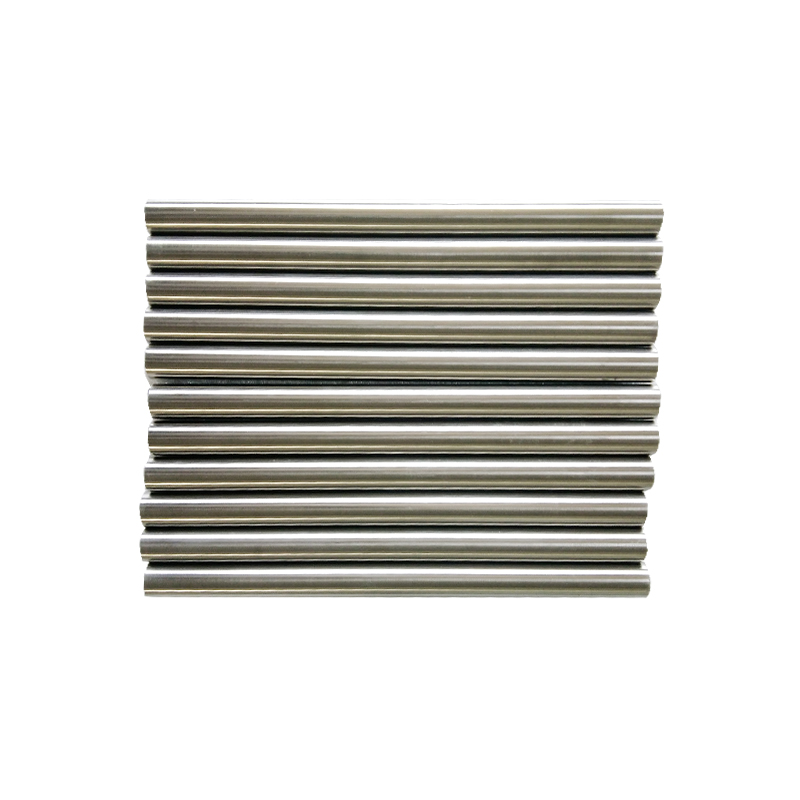
Key Physical and Mechanical Properties
Understanding the material properties of molybdenum strip is essential for engineers selecting it for specific applications. The following table summarizes the most important physical and mechanical characteristics of commercially pure molybdenum strip under standard conditions.
| Property | Value |
| Melting Point | 2,623°C (4,753°F) |
| Density | 10.22 g/cm³ |
| Thermal Conductivity | 138 W/m·K at 20°C |
| Coefficient of Thermal Expansion | 4.8 × 10⁻⁶/°C |
| Electrical Resistivity | 5.2 × 10⁻⁸ Ω·m at 20°C |
| Tensile Strength (annealed) | 700 – 900 MPa |
| Hardness (Vickers) | 160 – 230 HV (depending on temper) |
| Modulus of Elasticity | 329 GPa |
| Oxidation Onset Temperature (in air) | ~400°C |
One critical property to note is molybdenum's oxidation behavior. While it resists corrosion from most acids and liquid metals, it oxidizes readily in air above approximately 400°C, forming molybdenum trioxide (MoO₃), which is volatile and can cause surface degradation. For this reason, high-temperature applications of molybdenum strip almost always require a protective atmosphere — typically hydrogen, inert gas, or vacuum — or the use of specialized oxidation-resistant coatings.
How Molybdenum Strip Is Manufactured
The production of molybdenum strip begins with powder metallurgy, the standard starting process for refractory metal products. Molybdenum powder of high purity (typically 99.95% Mo or greater) is first pressed into billets or slabs under extremely high isostatic pressure, then sintered at temperatures approaching 2,000°C in a hydrogen atmosphere. This produces a dense, metallurgically sound ingot with uniform grain structure and minimal internal porosity.
The sintered ingot is then subjected to a series of hot and cold rolling passes to progressively reduce its thickness to strip dimensions. Because molybdenum is brittle at room temperature below its ductile-to-brittle transition temperature, initial rolling is performed hot — typically above 1,200°C — to maintain workability. As the material thins and its grain structure refines through successive passes, cold rolling becomes possible and is used in final stages to achieve precise thickness tolerances and improved surface finish. Intermediate annealing between rolling passes relieves internal stress and prevents cracking in the increasingly thin material.
Surface Finishing and Dimensional Tolerances
After rolling, molybdenum strip undergoes surface treatment depending on its intended application. Acid pickling removes surface oxides and scale, producing a clean metallic surface. Electropolishing or mechanical polishing can achieve smoother finishes required for optical, semiconductor, or vacuum applications. Thickness tolerances on high-quality molybdenum strip typically fall within ±0.005 mm for thicknesses below 0.1 mm, tightening further for precision-grade material used in electronics. Width tolerances and edge condition — whether slit, milled, or deburred — are also critical parameters specified by end users and affect both fit in precision assemblies and downstream processing behavior.
Molybdenum Alloy Strips and Their Advantages
While commercially pure molybdenum strip (Mo ≥ 99.95%) covers a broad range of applications, alloyed versions are produced to address specific performance limitations of pure molybdenum — particularly its susceptibility to recrystallization embrittlement at very high temperatures and its relatively modest creep resistance in sustained high-load, high-temperature service.
The most widely used molybdenum alloy strips include:
- TZM (Titanium-Zirconium-Molybdenum): Contains approximately 0.5% titanium, 0.08% zirconium, and trace carbon. TZM strip offers significantly higher recrystallization temperature, better creep resistance, and improved weldability compared to pure molybdenum, making it the preferred choice for high-temperature structural applications above 1,000°C.
- Mo-La (Molybdenum-Lanthanum Oxide): Lanthanum oxide (La₂O₃) additions of 0.3 to 0.7% inhibit grain growth at extreme temperatures and dramatically improve resistance to sagging and deformation in elevated temperature service. Mo-La strip is widely used in lamp and furnace electrode applications.
- Mo-W (Molybdenum-Tungsten): Tungsten additions increase density and hardness, improving performance in applications involving erosion by liquid metals such as zinc or lead. Mo-W strip is common in galvanizing and metallurgical processing equipment.
- Mo-Cu (Molybdenum-Copper): This composite combines molybdenum's low thermal expansion with copper's high thermal conductivity, making it valuable in electronic heat spreader and substrate applications where thermal management is critical.
Primary Industrial Applications of Molybdenum Strip
The combination of high-temperature stability, electrical conductivity, and precise form factor makes molybdenum strip indispensable in several demanding industrial sectors. Its applications are rarely interchangeable with other materials — when molybdenum strip is specified, it is almost always because no other material can meet the combination of requirements at an acceptable cost.
Lighting and Lamp Manufacturing
One of the oldest and largest uses of molybdenum strip is as foil seals in halogen and quartz lamps. In these lamps, a thin molybdenum strip (typically 0.025 to 0.1 mm thick) is used to create a hermetic seal between the quartz glass envelope and the tungsten filament lead wires. Molybdenum's thermal expansion coefficient closely matches that of fused quartz, which prevents stress cracking at the seal during the extreme thermal cycling the lamp undergoes in operation. Without this critical match, the seal would fail and the lamp's inert gas atmosphere would be lost, ending its functional life.
High-Temperature Furnace Components
Molybdenum strip is used extensively in the construction of high-temperature furnace heating elements, radiation shields, and structural components. As radiation shields, multiple layers of thin molybdenum strip are stacked concentrically around the hot zone to reflect radiant heat back toward the load and reduce energy consumption. The strip's high reflectivity at elevated temperatures, combined with its ability to maintain structural integrity well above 1,500°C in protective atmospheres, makes it far more effective than alternative shielding materials like stainless steel or nickel alloys, which soften and oxidize at these temperatures.
Semiconductor and Electronics Manufacturing
In the semiconductor industry, molybdenum strip is used as sputtering target material, substrate carrier components in diffusion furnaces, and structural elements in ion implantation equipment. Its dimensional stability at process temperatures, combined with its compatibility with ultra-high vacuum environments and lack of outgassing, make it a preferred material for precision semiconductor process hardware. Molybdenum strip is also used in thin-film photovoltaic (PV) solar cell manufacturing as the back contact electrode in CIGS (copper indium gallium selenide) cells, where it is deposited onto glass substrates to form the electrical foundation of the cell stack.
Quality Standards and Specifications to Look For
When sourcing molybdenum strip, specifying the correct quality standard is as important as defining the physical dimensions. Different applications demand different levels of purity, surface cleanliness, and mechanical consistency. The following standards and parameters are most commonly referenced in molybdenum strip procurement:
- ASTM B386: The primary American standard for molybdenum and molybdenum alloy plate, sheet, strip, and foil. Specifies chemical composition, mechanical property requirements, and permissible variation in dimensions for different grades including pure Mo, TZM, and Mo-30W.
- Purity certification: For electronics and vacuum applications, request chemical analysis certificates confirming purity at 99.95% Mo minimum, with specific limits on critical impurities such as carbon, oxygen, nitrogen, iron, and nickel.
- Surface condition: Specify whether the strip is required in as-rolled, pickled, polished, or electropolished condition. Surface roughness (Ra value) should be stated for precision applications.
- Temper state: Molybdenum strip is available in stress-relieved, annealed, or work-hardened conditions, each offering different combinations of hardness, ductility, and tensile strength. Specify the required temper based on the forming or installation requirements of your application.
- Packaging and handling: Molybdenum strip, especially in thinner gauges, is susceptible to surface contamination, bending damage, and edge cracking if improperly handled. Request clean-room packaging or interleaved protective film for precision-grade material.
Handling, Cutting, and Forming Molybdenum Strip
Molybdenum strip requires careful handling due to its relatively low room-temperature ductility compared to common engineering metals. Although modern rolling techniques have significantly improved the formability of thin molybdenum strip, it remains more susceptible to cracking from sharp bends, impact, or improper clamping than materials like stainless steel or copper alloy strip of equivalent thickness.
Cutting is best performed using precision slitting, laser cutting, wire EDM (electrical discharge machining), or fine-blanking processes. Shearing is possible on thicker strip but requires sharp, well-maintained tooling and appropriate clearances to avoid edge cracking. For bending operations, minimum bend radii should be respected — typically two to three times the strip thickness for annealed material — and forming dies should be free of burrs or contaminants that could initiate surface cracks. Warming the strip moderately before forming (to approximately 200°C) can improve ductility in thicker sections and reduce the risk of brittle fracture during cold forming operations.
Molybdenum strip is a specialized but irreplaceable material in the toolkit of advanced manufacturing. Its combination of extreme heat resistance, dimensional precision, and electrical performance covers application requirements that no common metal can match. For engineers and procurement professionals working in semiconductor, aerospace, energy, or lighting industries, investing time in understanding molybdenum strip's properties, grades, and quality parameters pays direct dividends in component reliability and long-term operational performance.