English
 русский


What Is Molybdenum Wire and Why Does It Matter?
Molybdenum wire is a high-performance metallic wire produced from molybdenum, a refractory metal with the chemical symbol Mo and atomic number 42. Known for its exceptionally high melting point of 2,623°C (4,753°F), molybdenum ranks among the most heat-resistant pure metals available for industrial use. When drawn into wire form, it retains many of its core physical properties — high tensile strength, excellent electrical conductivity, low thermal expansion, and outstanding resistance to corrosion in most industrial environments. These combined characteristics make molybdenum wire a critical material in sectors where ordinary metals would simply fail under extreme thermal, mechanical, or electrical stress.
Molybdenum wire is not a niche or obscure product. It plays a direct, functional role in manufacturing processes and finished products that most industries rely on daily — from the precision cutting of hardened steel components in aerospace machining to the support structures inside incandescent and halogen light bulbs. Understanding what molybdenum wire is, how it is made, and where it performs best provides both engineers and procurement professionals with the foundation needed to select the right grade and specification for demanding applications.
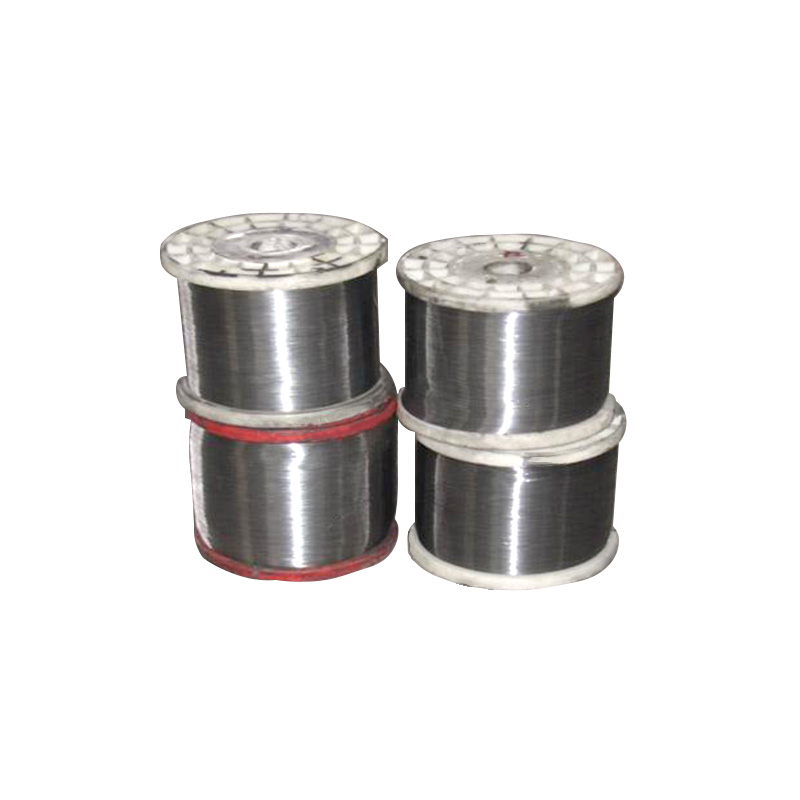
Key Physical and Chemical Properties of Molybdenum Wire
The value of molybdenum wire lies almost entirely in its material properties, which set it apart from more common wire materials like stainless steel, copper, or tungsten. The following properties are the most relevant to its industrial applications:
- High Melting Point: At 2,623°C, molybdenum has one of the highest melting points of any pure element, surpassed only by tungsten, rhenium, and osmium among metals. This makes molybdenum wire suitable for use in furnaces, vacuum environments, and high-temperature processing equipment where other metals would melt or deform.
- High Tensile Strength: Molybdenum wire exhibits tensile strength ranging from 700 MPa to over 2,000 MPa depending on the wire diameter and drawing process. Fine-drawn wire achieves the highest tensile values, making it suitable for EDM (electrical discharge machining) where wire tension directly affects cutting accuracy.
- Low Thermal Expansion: With a coefficient of thermal expansion of approximately 4.8 × 10⁻⁶/°C, molybdenum expands very little when heated. This dimensional stability is critical in applications where tight tolerances must be maintained across wide temperature ranges, such as in semiconductor manufacturing equipment.
- Good Electrical Conductivity: Molybdenum has an electrical resistivity of approximately 5.2 × 10⁻⁸ Ω·m at room temperature, making it a reasonably good conductor — useful in EDM wire cutting and as filament supports in lighting components.
- Corrosion Resistance: Molybdenum resists attack from many acids, including hydrochloric and sulfuric acid at room temperature, and is stable in hydrogen and inert gas atmospheres at elevated temperatures. However, it oxidizes readily in air above 600°C, which must be accounted for in open-atmosphere high-temperature applications.
- High Density: At 10.28 g/cm³, molybdenum is significantly denser than steel (7.85 g/cm³), which contributes to its mass and rigidity even in very fine wire gauges.
How Molybdenum Wire Is Manufactured
The production of molybdenum wire begins with the reduction of molybdenum trioxide (MoO₃) — obtained from the roasting of molybdenite ore — into pure molybdenum powder using hydrogen reduction at temperatures above 1,000°C. The resulting powder is then compacted into billets under high pressure and sintered in a hydrogen atmosphere furnace at temperatures approaching 2,200°C to produce dense, solid molybdenum bars. This powder metallurgy route is standard for refractory metals that cannot be economically melted and cast using conventional methods due to their extremely high melting points.
The sintered bars are then hot-worked through a series of swaging and rolling passes that progressively reduce their diameter and align the grain structure of the metal. This thermomechanical processing, carried out at temperatures between 1,200°C and 1,600°C, improves the ductility of the material and prepares it for cold drawing. The rods are then drawn through tungsten carbide or diamond dies in multiple passes, with intermediate annealing steps to relieve internal stress and prevent cracking. Each successive die reduces the wire diameter slightly, with the final passes producing wire as fine as 0.01 mm (10 microns) for specialized lighting and semiconductor applications.
Surface quality, diameter consistency, and mechanical properties are tightly controlled throughout the drawing process. Finished wire is inspected for surface defects, dimensional tolerance, and tensile strength before being wound onto spools. For EDM wire cutting applications, tolerances on diameter are typically held to ±0.001 mm or better, as any variation in wire diameter directly affects the dimensional accuracy of the machined part.
Primary Applications of Molybdenum Wire Across Industries
Molybdenum wire serves a remarkably diverse range of applications, each exploiting a different combination of its core properties. The following sectors represent the largest and most technically significant end uses.
EDM Wire Cutting in Precision Machining
Wire electrical discharge machining (WEDM) is one of the largest single applications for molybdenum wire globally. In WEDM, a continuously fed wire electrode is used to cut hardened metals through controlled electrical sparking — the wire never physically contacts the workpiece, but the electrical discharges erode material from the part with extreme precision. Molybdenum wire is widely used in Chinese and Asian wire EDM machines, particularly for cutting tool steels, carbides, and heat-treated molds where tolerances in the range of ±0.002 mm are routinely required. Its high tensile strength allows the wire to be held under significant tension without breaking, which improves cutting stability and reduces wire vibration that would otherwise introduce positional errors. Molybdenum wire for WEDM is typically supplied in diameters of 0.10 mm, 0.15 mm, 0.18 mm, and 0.20 mm on precision-wound spools.
Lighting Industry: Filament Supports and Lead-In Wires
In incandescent and halogen lighting, molybdenum wire serves as the filament support structure and as the lead-in wire that connects the tungsten filament to the electrical contacts inside the bulb. Its role as a support wire is critical because the tungsten filament operates at temperatures exceeding 2,000°C and must be mechanically supported without sagging or deforming under thermal stress. Molybdenum's low thermal expansion coefficient ensures that the support geometry remains stable across the full operational temperature range of the bulb. Fine molybdenum wire in the 0.02 mm to 0.10 mm diameter range is used for this purpose, and the wire must have a precisely controlled oxide layer to ensure good adhesion to the glass envelope during sealing.
High-Temperature Furnace Components
Molybdenum wire is used as heating elements, thermocouple sheathing supports, and structural wiring within high-temperature industrial and laboratory furnaces operating in vacuum or hydrogen atmospheres. Furnaces used for sintering ceramics, processing rare earth magnets, annealing metals, and growing single-crystal materials routinely operate above 1,400°C — an environment where steel and nickel alloys are unsuitable. Molybdenum wire and wound wire heating elements maintain their structural integrity and electrical resistance characteristics in these environments, providing stable, long-service heating solutions. The wire must be used in non-oxidizing or vacuum environments at these temperatures because molybdenum forms volatile oxides in air above 600°C that would rapidly degrade the element.
Semiconductor and Display Manufacturing
In the semiconductor and flat panel display industries, molybdenum is used in sputtering targets and thin-film deposition processes, but molybdenum wire specifically finds use in ion implantation equipment, electron beam sources, and as grid wires in vacuum tubes and electron guns. The combination of high-temperature stability, precise diameter control, and consistent electrical properties makes fine molybdenum wire an ideal material for components that must perform reliably in ultra-high vacuum environments under continuous thermal and electrical cycling.
Molybdenum Wire Grades and Specifications
Molybdenum wire is commercially available in several purity grades and alloyed variants, each suited to different performance requirements. The table below outlines the most commonly sourced types:
| Grade | Composition | Key Advantage | Typical Application |
| Pure Mo Wire | ≥99.95% Mo | High conductivity, standard properties | EDM cutting, lighting supports |
| Mo-La Wire (MLa) | Mo + 0.3–0.7% La₂O₃ | Improved recrystallization resistance | High-temp furnace elements |
| TZM Alloy Wire | Mo + 0.5% Ti + 0.08% Zr | Higher strength at elevated temps | Aerospace, structural high-temp use |
| Mo-W Alloy Wire | Mo + 20–30% W | Enhanced hardness and wear resistance | Glass industry, aggressive environments |
Selecting the Right Molybdenum Wire: Practical Buying Considerations
When sourcing molybdenum wire for industrial or manufacturing use, several specification parameters must be clearly defined to ensure the wire performs as required in its target application. Purchasing the wrong diameter, surface finish, or mechanical grade can lead to premature wire breakage, machining inaccuracies, or component failure in service.
- Diameter and Tolerance: Specify the nominal diameter and acceptable tolerance band. For EDM applications, ±0.001 mm is typical. For furnace and structural uses, tolerances of ±0.005 mm or wider may be acceptable.
- Tensile Strength: Higher tensile strength is required for fine EDM wire to maintain tension without breaking. Specify the minimum tensile strength in MPa relative to the wire diameter.
- Surface Condition: For lighting and semiconductor applications, oxidized or bright-drawn surfaces have different adhesion and electrical properties. Confirm the required surface finish with your supplier.
- Spool Weight and Winding: For automated EDM machines, the spool geometry and winding tension affect wire feeding performance. Confirm spool compatibility with your specific machine model before ordering.
- Purity Certification: Request a material test report (MTR) confirming chemical purity, especially for semiconductor or medical device applications where trace contaminants can affect process outcomes.
Major suppliers of molybdenum wire include H.C. Starck (now Materion), Plansee Group, ATTL Advanced Materials in China, and Midwest Tungsten Service in North America. Chinese manufacturers have become increasingly competitive on price for EDM-grade wire, while European and North American suppliers typically offer tighter quality documentation and material traceability required by aerospace and defense specifications. Regardless of source, always verify that the supplier can provide independent third-party testing documentation for the lot being purchased, particularly when the wire is destined for safety-critical or precision manufacturing applications.